Wildomar Seed Co. · Starting the garden · Wildomar, California

Growing what works here.

I’m learning how to garden from scratch in Southern California, one seed, one season and one mistake at a time. I’m testing varieties in my own garden, documenting what happens, and learning about the plants, people and horticultural traditions that have shaped this place.

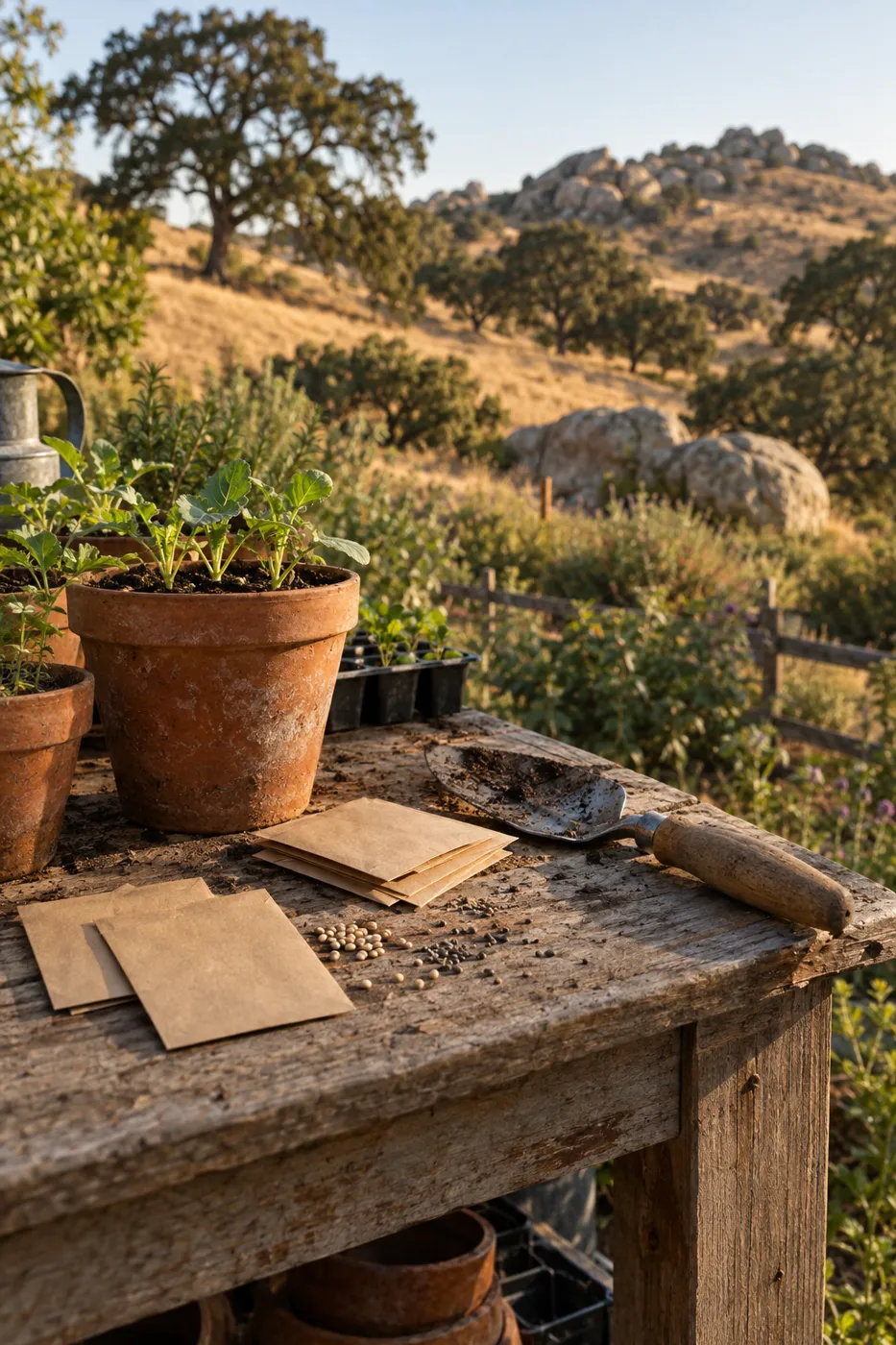
A weathered potting bench with kraft seed envelopes and seedlings, golden hills and oaks behind
Zone 9bSunset Zone 18 · Wildomar, CA

This is where it starts

I don’t have all the answers. That’s the point.

Wildomar Seed Co. started with a simple question: what actually grows well here? Not in a greenhouse somewhere else. Not in a catalog description. Here.

So I’m starting with a garden, a bunch of seeds, and a willingness to see what happens. Some things will thrive. Some things will struggle. Some things will die spectacularly. I’ll document all of it.

The experiment

Will it grow here?

Every season I test varieties and growing methods under the conditions they actually have to live in. I keep track of what works, what doesn’t, and what I’d do differently next time.

  1. Seed
  2. Start
  3. Transplant
  4. Grow
  5. Harvest
  6. Evaluate

Wildomar Tested

A seed doesn’t earn that label because a catalog says it’s good. It earns it by growing here. Varieties that repeatedly prove themselves can earn a place in the collection.

The Garden

Starting from scratch.

A public notebook. From the first seed tray through transplanting, heat, pests, harvests, failures and everything in between. It’s a real garden, not a polished gardening show.

  • 🌱 Seeds that don’t germinate
  • ☀️ Plants dealing with heat
  • 🐛 Pest problems
  • 💧 Watering experiments
  • 🌿 Native plants
  • 🍅 Successful harvests
  • ❌ Failed experiments
  • 📓 Things I learn

What We’re Testing

The garden is the test plot.

As the trials grow, each variety will eventually have a page of its own. For now, the honest verdict is: too early to tell.

VarietyStartedMethodStatus

Watching: germination · plant vigor · heat tolerance · disease and pest resistance · productivity · flavor · overall performance.

Learn

Here’s what I’m learning.

A long-term library, written as a student, not an authority.

  • Gardening

    Beginner-friendly, practical.

  • Native plants

    What grows here naturally.

  • Horticulture

    Techniques and experiments.

  • Ecology

    Pollinators, soil, water, insects.

  • History

    How agriculture changed the region.

  • Culture

    Foodways and local traditions.

  • Indigenous horticulture

    Carefully researched, with respect.

Local

Learn the place before you try to grow in it.

Before we planted the garden, plants were already here. I’m researching native plants, ecosystems, agricultural history, Indigenous horticultural practices and foodways connected to this region. Not as an authority. As someone trying to understand where he’s putting his garden.

Local · Wildomar planting calendar

What to plant, month by month.

Pick a month to see what to sow in gardens below 2,000 feet in our valley. Fall and winter look like a strong growing season here, and I’m testing that this year.

/

Average high / low

Planting timing adapted from the UC Master Gardener Program of Riverside County monthly tips and NOAA-based sowing windows for Wildomar. Temperatures: NOAA 1991–2020 normals.

Growing somewhere else?

This valley is the test. Your garden is the goal.

Our trial notes carry over best to other hot, dry places. If your garden is cooler, wetter, or has a shorter season, we’ll be plain about what we know and what we don’t. For your local timing, the best advice usually comes from your state’s extension service: university gardening experts who study your soil and weather.

Here’s where we’d start, by region.

Closest match to our climate

Desert Southwest

Arizona, southern Nevada, New Mexico low desert

Hot, dry summers and a strong fall-through-spring season, a lot like ours. Our trial notes should translate well here.

Texas & the Gulf South

Texas, Louisiana, Oklahoma

Long, hot summers with two main planting windows, spring and fall.

Pacific Northwest

Oregon, Washington

Cool, wet springs and mild summers. Warm-season crops usually go in later than the calendar suggests.

Northeast & Mid-Atlantic

New England, New York, Pennsylvania, and south to Virginia

A shorter season with cold winters. Starting seeds indoors in late winter buys you weeks.

Useful anywhere

Not sure a variety will work where you are? Email us your zip code and what you want to grow. If we don’t know, we’ll say so.

Seeds

Seeds we’ve actually grown.

Eventually, the garden becomes the seed company. Right now, we’re testing. The goal isn’t hundreds of varieties. It’s a small collection of seeds with a story behind them and growing experience to back them up.

Currently testing, not yet Wildomar Tested

The shop opens when the first varieties have earned it. Each listing will show what we tested, where and how we grew it, what happened, and what we learned. Join the garden to hear first.

About

A garden first. A seed company growing out of it.

I’m not a lifelong farmer. I’m not a master gardener. I’m a regular guy who decided to figure out how to grow things.

So instead of pretending I already know, I’m building a garden and documenting the process. I’m testing seeds, trying different growing methods, making mistakes, and learning about native plants and the people who have been working with this land for generations.

When I find varieties that genuinely perform here, I want to save those seeds and share them with other people trying to grow in the same kind of place.

Follow along

The garden, week by week.

Find me at @wildomarseed.co.

Wildomar Seed Co. logo: a California poppy with roots inside a sun arc

Join the garden.

Come along for the season. Get the garden journal, experiments, things I’m learning, and occasional stories about the plants and place around us. No constant sales pitches. Just the garden.